The first cold morning of the season, the front door turns into a negotiation. Someone can't find a mitten. Someone else insists a hoodie is enough. You stand there holding a hat, wondering whether twenty minutes of fresh air is worth forty minutes of prep.
It is. Kids who play outside in January come back rosier, hungrier and calmer, and they learn something useful: weather is a thing you dress for, not a thing you hide from. The trick isn't heroic effort. It's a system — the right layers, a few games in your back pocket, and a clear line for when it's time to go in.
Start With Layers, Not Bulk
The goal isn't to build a snowman-shaped child. It's to trap warm air next to the body while letting sweat escape. Three thin layers do that better than one enormous coat, and they let you adjust as the afternoon warms up or the wind picks up.
- Base layer: thin, snug and close to the skin — wool or a synthetic blend. Skip cotton right against the body; it soaks up sweat and turns cold the moment they stop running.
- Mid layer: fleece, a wool sweater or a puffy vest. This is your adjustable layer, the one that comes off when they're climbing and goes back on when they're standing in line for the sled hill.
- Outer layer: a wind- and water-resistant jacket and snow pants. Room to move matters more than thickness here.
Then run the two-second fit test before you open the door. Ask them to reach both arms overhead and touch their toes. If the sleeves pull back and leave a bare strip of wrist, or the coat rides up over their back, size up or add a longer mid layer. Snow pants should overlap the jacket at the waist — that overlap is what keeps snow out when they inevitably sit down in a drift.
If they're already toasty standing on the porch, they're overdressed for running.
Dress them slightly cool at the start. Kids generate a surprising amount of heat once they're moving, and a child who's sweating in ten minutes is a child who's shivering in twenty-five.
Hands, Feet and Heads Decide the Day
Most winter misery starts at the extremities, and most of it is fixable.
Mittens beat gloves for younger kids, because fingers share heat instead of sitting in separate cold compartments. Two thin pairs of socks beat one thick pair — the second pair adds warmth, but bunching cuts off circulation and makes feet colder. Boots need enough room to wiggle toes, with a bit of space at the front. A warm hat plus a neck gaiter closes the gap between collar and chin, which is where a lot of heat quietly escapes.
The backup bag
Keep a canvas tote by the door with spare mittens, spare socks, a second hat and a small towel. When a mitten gets soaked in minute eight, you swap it at the door instead of ending the whole outing. This one habit prevents more meltdowns than any coat upgrade.
Winter Games That Keep Feet Moving
Cold is mostly a problem for kids who are standing still. Choose activities with motion built in, and rotate every ten minutes or so — boredom in winter is just cold in disguise.
- Snow obstacle course: mounds to climb over, a line to balance along, a bucket to circle twice. Set it up once and it runs itself.
- Follow the leader: the leader picks the route, everyone copies. Works for mixed ages because the pace stays slow but constant.
- Shovel relay: two teams, one pile, one target. Give them light kid-sized shovels and let them move snow from here to there for no reason at all.
- Freeze tag with a thaw: frozen players do ten jumping jacks to rejoin. Sneaky, but it works.
- Snow kitchen: pack snow into muffin tins, stir with sticks, decorate with pine needles. Better for kids who'd rather build than run — which means thicker layers and closer check-ins.
- Colour hunt: before they go out, spritz a few spots with coloured water. They have to find every patch.
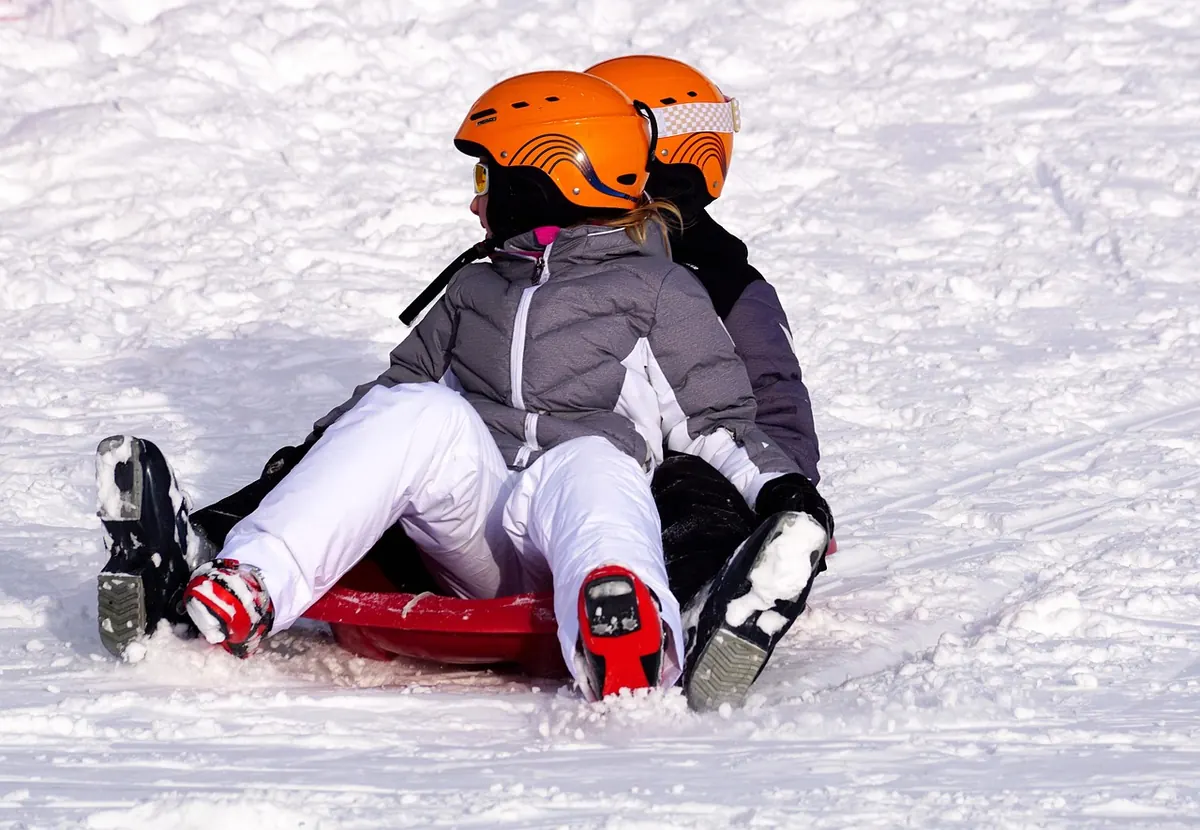
If you have a sled, a hill and a thermos, you already have an afternoon. Just agree on the boundaries before the first run, and make the walk back up the hill the warm-up.
How Cold Is Too Cold
Wind matters more than the number on the thermometer. A calm, dry day at 25°F can feel pleasant; the same temperature with a stiff wind cuts straight through a coat. Check your local forecast for wind chill rather than temperature alone, and treat the dangerous range your weather service flags as an indoor day.
For everyday outings, a few simple rules cover most situations:
- Check in every 20 to 30 minutes with younger children. Older kids who are actively moving can usually go longer, but they still need a check.
- Shivering that doesn't stop once they start moving means it's time to go in.
- Numb fingers, tingling, or pale, waxy patches on cheeks, nose, ears or fingertips mean the same thing. Head inside and warm up gradually.
- Very young children lose heat faster and can't always explain that they're cold. Shorten outings and check their skin and hands yourself.
If skin looks white or waxy and feels firm, or if numbness doesn't fade after gentle warming, get medical help rather than waiting it out. And if your child has a condition that affects circulation or how their body handles temperature, ask their doctor what limits make sense for them — general guidance only goes so far.
Coming Back In Without the Meltdown
The doorway is where good afternoons fall apart. Strip snow pants, boots and mittens off before anyone walks through the house, and hang wet gear up right away so it's dry for tomorrow.
Warm them from the inside out with something warm but not hot — cocoa, broth, soup. For cold hands, use lukewarm water or warm skin contact, and warm up slowly. Don't rub numb skin and don't park cold fingers against a radiator or a hot water bottle; skin that can't feel much burns easily.
Make It a Habit, Not a Battle
The families who get outside all winter aren't tougher than everyone else. They've just lowered the bar and removed the friction. Fifteen minutes in the backyard counts. So does a walk to the corner and back.
Pick the same time each day, roughly — right after school, or before lunch on weekends. Keep hats, mittens and snow pants in one spot so nobody has to hunt. Say yes when a child asks to go back out, even if it's five minutes before dinner. And go with them sometimes. A parent who's willing to lie in the snow and make a snow angel is the best argument for cold weather there is.
Winter is long. With a decent layer system, a spare pair of mittens and one good game, it turns into a season your kids actually look forward to.
Photo: suju-foto / Pixabay